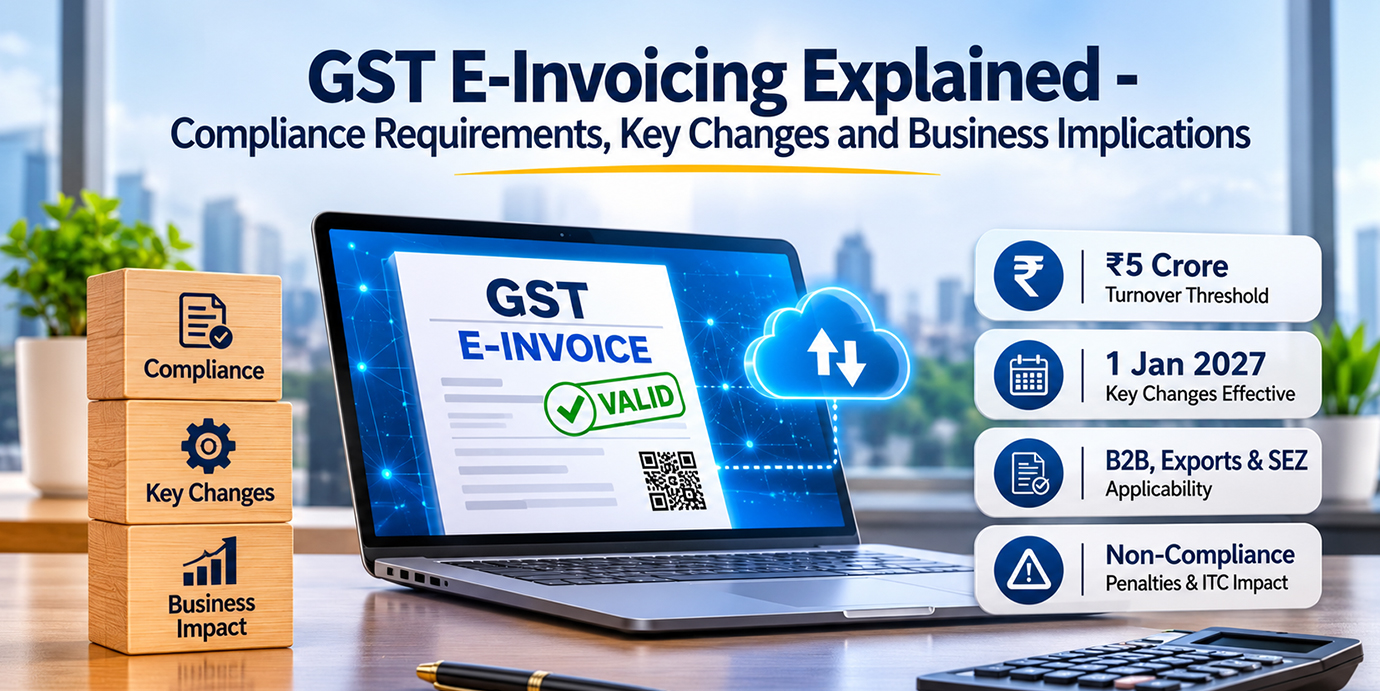
GST E-Invoicing Explained – Compliance Requirements, Key Changes and Business Implications

Background To curb GST evasion, prevent revenue leakage, and improve transparency in tax administration, the Government introduced the e-invoicing system for the electronic reporting and authentication of specified invoices and related documents. Under this system, registered taxpayers covered by the e-invoicing provisions are required to report the details of specified tax invoices, export invoices, debit notes and credit notes, in the prescribed format, to an…
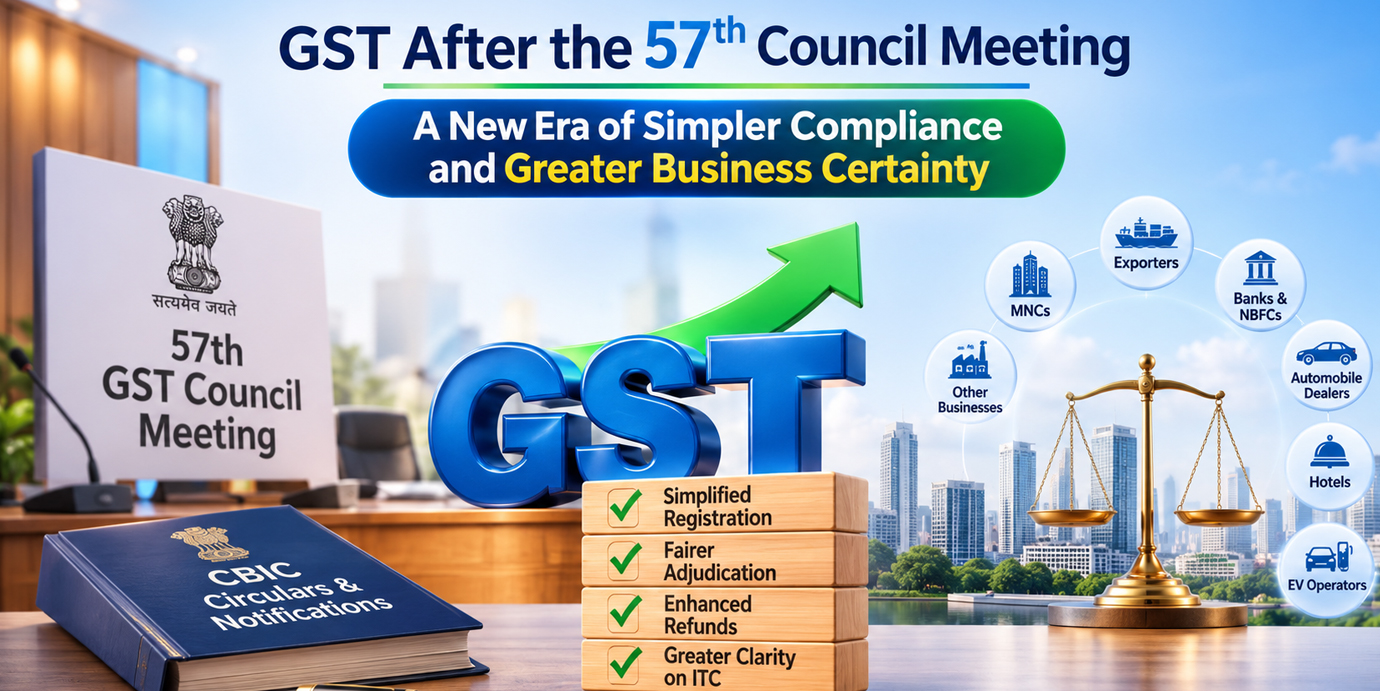
GST After the 57th Council Meeting – A New Era of Simpler Compliance and Greater Business Certainty

India’s GST framework is taking another significant step towards becoming simpler, more transparent, and business-friendly, with the latest CBIC clarifications promising meaningful relief across industries. A shift in approach, not just in regulations The eight circulars issued by the Central Board of Indirect Taxes and Customs (CBIC) on 26 October 2026, following the 57th GST Council meeting, signal an important shift in the way GST…

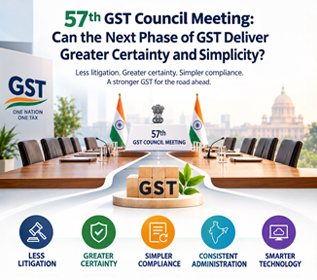
57th GST Council Meeting: Can the Next Phase of GST Deliver Greater Certainty and Simplicity?

The 57th GST Council Meeting is scheduled for 7 October 2026 in New Delhi, with the preparatory Officers’ Meetings scheduled for 5 and 6 October. The meeting, which was originally scheduled for 12 September, has now been rescheduled. For businesses, tax professionals and the wider GST community, the upcoming meeting assumes considerable importance. After almost nine years of GST, the focus is no longer merely…

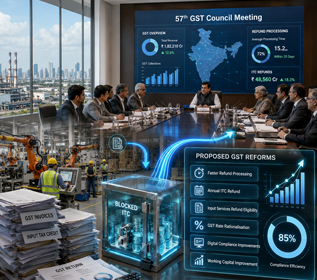
GST Council’s Next Big Challenge: Will the 57th Meeting Deliver Long-Awaited ITC Relief for Manufacturers?

With GST 2.0’s rate rationalisation largely complete, the GST Council is now turning its attention to a far more complex, but equally significant issue that has quietly strained the finances of businesses across India — the accumulation of Input Tax Credit (ITC) under the Inverted Duty Structure (IDS). As the Council prepares for its 57th meeting, expected in late July or August, government sources indicate…

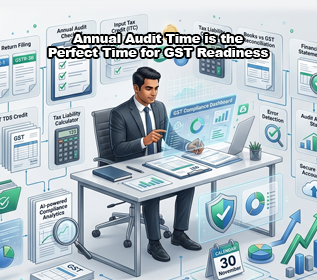
Annual Audit Time is the Perfect Time for GST Readiness

With the financial year now concluded and the annual audit season underway, businesses are primarily focused on finalising their financial statements and completing the statutory audit. Alongside the financial audit, this is also the ideal time to undertake a comprehensive review of GST compliance to ensure that all GST-related matters pertaining to the previous financial year are appropriately addressed before the statutory deadlines expire. The…

Toll Data Scrutiny and the Compliance Value of e-Way Bill Closure

In recent months, GST authorities have increasingly issued notices and summons in cases involving mismatch or non-tracing of vehicle movement through toll naka or FASTag data against the corresponding e-Way Bills generated by taxpayers. Authorities are increasingly relying on toll plaza and FASTag movement data to verify whether goods covered under an e-Way Bill have actually moved as declared. As a result, notices and enquiries…

Zero-Rated Supplies under GST Strengthened by Documentation Precision (Exports & SEZ Supplies)

In the GST framework, zero-rated supplies covering exports and supplies to SEZ units or developers under Section 16 of the IGST Act, offer significant tax advantages. These include the ability to supply under LUT without payment of tax and to claim refunds of accumulated ITC. However, these benefits are not automatic; they are entirely dependent on robust documentation. In practice, audit disputes seldom arise from…

Essential GST Checks Every Business Must Complete Before 31st March

With the financial year drawing to a close, businesses must look beyond simply finalising their accounts and take time to review key GST compliances. A timely review can help avoid penalties, protect cash flow, and ensures smooth operations from 1st April. Below are some important areas every business should check before the year closes. If you are engaged in the export of goods or services,…

Accumulated ITC under GST 2.0: A Practical Guide for MSMEs

With the introduction of GST 2.0 and rate rationalisation, many businesses are encountering a new and unexpected challenge. While GST rates on finished goods were reduced to improve affordability for consumers, GST on inputs and services has largely remained unchanged. This mismatch has resulted in a growing accumulation of Input Tax Credit (ITC), particularly for businesses operating at GST rates of 5% or lower. For…

Understanding Input Tax Credit on Capital Goods under GST

Capital goods under GST refer to assets such as machinery, equipment, or vehicles that are used or intended to be used in the course or furtherance of business and that provide economic benefits over a period of more than one year. These assets are in the nature of long-term investments that contribute to income generation and are not consumed immediately in the normal course of…