
India’s GST framework is taking another significant step towards becoming simpler, more transparent, and business-friendly, with the latest CBIC clarifications promising meaningful relief across industries.
A shift in approach, not just in regulations
The eight circulars issued by the Central Board of Indirect Taxes and Customs (CBIC) on 26 October 2026, following the 57th GST Council meeting, signal an important shift in the way GST is administered – from a predominantly compliance-driven approach towards facilitation and certainty for taxpayers. Read alongside the notifications effective from 1 November 2026, these changes aim to simplify compliance, reduce unnecessary litigation and improve cash flow for businesses.
For years, businesses have grappled with recurring challenges, including delays in GST registrations due to avoidable queries, generic show cause notices, prolonged refund processing and disputes over input tax credit (ITC) claims. The latest round of clarifications addresses several of these longstanding concerns, providing greater clarity on contentious issues and, in certain cases, extending relief retrospectively.
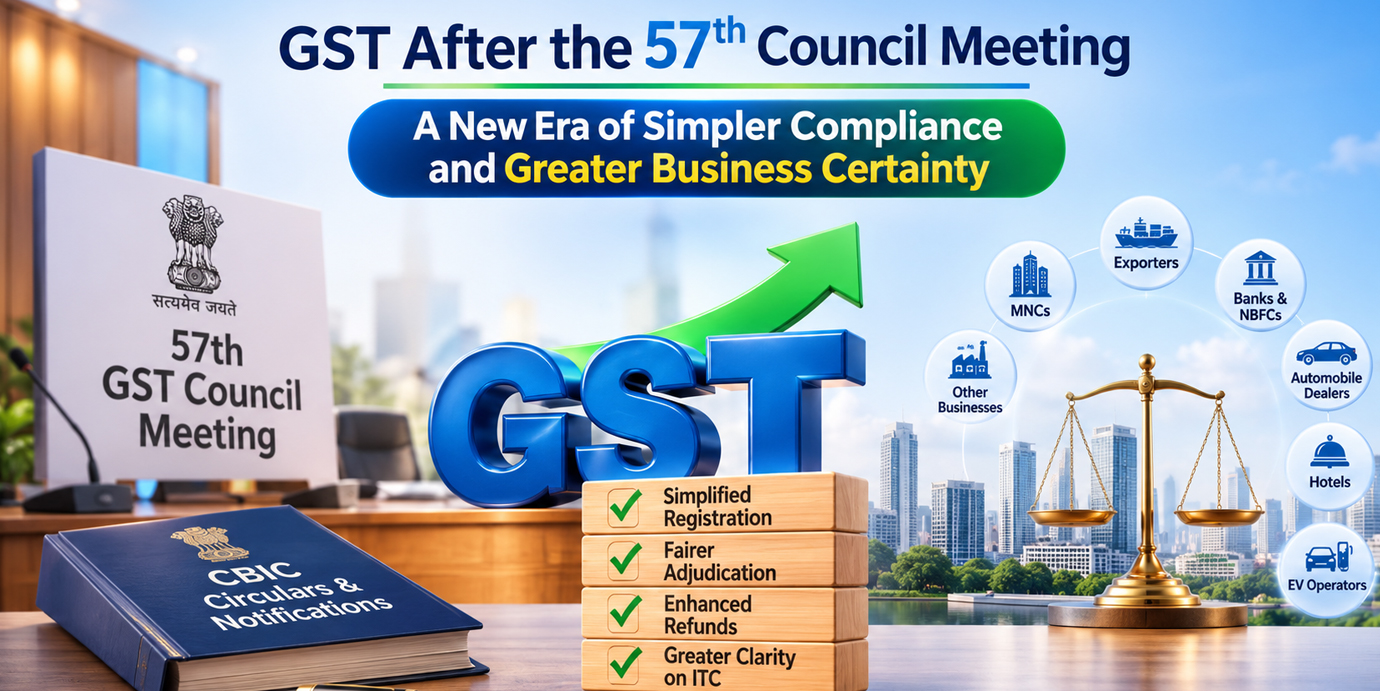
The bigger picture – Four key themes driving the changes
Getting started is becoming easier. GST registration is moving towards a more predictable and time-bound process. Officers can no longer raise objections on grounds such as the use of a residential address, a domestic electricity connection, or the absence of an Udyam registration certificate. Define timelines, deemed approval in specified cases where officers fail to act, and a dedicated grievance mechanism provide applicants with greater confidence and protection against unnecessary procedural hurdles.
Dispute resolution is becoming fairer and more accountable. The latest clarifications reinforce the need for greater discipline in tax demands and adjudication. Show cause notices must clearly establish the grounds of a proposed demand, while fraud-related provisions cannot be invoked merely because tax remains unpaid. Adjudicating authorities are also expected to properly consider and address taxpayers’ submissions. This marks a positive move towards more transparent, evidence-based, and reasoned proceedings.
Cash flow is receiving a much-needed boost. Businesses stand to benefit from several measures aimed at unlocking funds and easing refund-related constraints. Pre-deposits are to be refunded without requiring a specific direction, and refunds cannot be withheld merely because the department intends to file an appeal. Relief has been extended to inverted-duty refunds involving input services, while the 1.5 times cap on zero-rated goods turnover has been removed. Further, the retrospective omission of Rule 96(10), following the Supreme Court’s ruling in Goodluck India, could prove particularly significant for exporters facing long-pending disputes.
Long-standing ITC disputes are getting greater clarity. The clarifications relating to Input Service Distributors (ISDs), the 50% ITC option for banks and NBFCs, demonstration vehicles under the dealer-agency model and post-supply discounts address several issues that have historically triggered audits, disagreements, and litigation across industries. Together, these measures offer businesses a clearer framework for managing their credit positions.
What these changes mean for industry
While the benefits extend across the business ecosystem, certain sectors are likely to experience a more direct and significant impact.
Exporters emerge as some of the biggest beneficiaries. Exporters of goods who claimed IGST refunds while availing benefits under Advance Authorisation, Export Oriented Units (EOU) or similar import schemes can now explore closure of pending proceedings under Rule 96(10). Service exporters, including IT/ITeS companies and back-office operations catering to overseas group entities, also gain greater certainty with the clarification that qualifying receipts through SNRR and INR Nostro accounts can meet the requirements for zero-rating.
Foreign companies and MNC subsidiaries stand to benefit on multiple fronts. Faster GST registration processes can make market entry and expansion into additional States more straightforward. Meanwhile, the ISD-related clarifications provide much-needed direction on the distribution of input tax credit between head offices and their branches, helping multinational groups streamline their GST structures.
Banks, NBFCs and financial institutions gain a more defined approach to reporting ITC under the 50% option. The clarifications also provide relief in respect of past reporting where the credit availed remains consistent, reducing uncertainty around historical positions.
Automobile dealers, hotels, EV operators, delivery platforms, and scrap and recycling businesses will see sector-specific changes covering ITC eligibility, reverse charge mechanisms and TDS obligations. These developments warrant particular attention, as some of the changes affect the person responsible for discharging tax rather than merely altering the applicable tax treatment.
Businesses dealing with tax notices and appeals also have reason to revisit their existing positions. The revised approach provides a practical basis for examining whether demands are adequately substantiated, properly quantified and supported by fair and reasoned adjudication.
The way forward
These reforms create opportunities for businesses but the benefits will depend largely on how proactively they respond. Relief relating to past disputes, refunds and ITC positions will not automatically translate into savings; businesses must identify the provisions applicable to them and take the necessary steps to claim the available benefits. It is equally important to recognise that the reforms are being introduced in phases. While certain measures take effect from 1 November 2026, e-invoicing requirements for specified reverse charge supplies and import of services are scheduled from 1 January 2027, with capital goods refunds and further reforms expected from April 2027.
A practical starting point would be to review pending shoe cause notices, appeals and refund rejections against the latest clarifications, reassess existing ITC positions, update tax-rate masters and revisit vendor management and credit-note processes ahead of the next return cycle.
Overall, the post-57th Council circulars represents a welcome step towards a more transparent, predictable and trust-based GST regime. Businesses that proactively assess these changes and align their internal processes will be better positioned to minimise tax exposure, unlock potential savings and operate with greater certainty.
This is also where experienced tax advisory firms play a vital role – helping businesses interpret evolving GST provisions, identify applicable relief, resolve legacy disputes and translate regulatory changes into practical compliance strategies and measurable business benefits.
For a detailed, circular-wise analysis of these developments and their implications, please refer to our latest HSCo newsletter.