
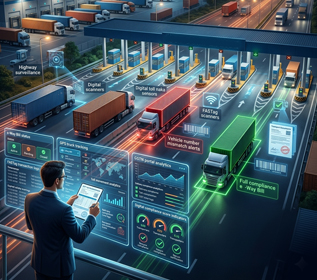
In recent months, GST authorities have increasingly issued notices and summons in cases involving mismatch or non-tracing of vehicle movement through toll naka or FASTag data against the corresponding e-Way Bills generated by taxpayers.
Authorities are increasingly relying on toll plaza and FASTag movement data to verify whether goods covered under an e-Way Bill have actually moved as declared. As a result, notices and enquiries are being issued in cases where:
- Toll data does not establish corresponding vehicle movement;
- Incorrect vehicle numbers are reported in the e-Way Bill;
- e-Way Bill validity expires without proper closure;
- Multiple e-Way Bills remain active for extended periods;
- Delivery completion is not adequately reflected in records.
This heightened use of movement analytics has led to increased departmental scrutiny, particularly in industries involving frequent transportation of goods, stock transfers, job work transactions, and high-volume dispatch operations.
Understanding the New e-Way Bill Closure Mechanism
To strengthen movement tracking and improve GST compliance, GSTN has introduced a new facility enabling taxpayers to close e-Way Bills through multiple options.
The e-Way Bill can now be closed:
- e-Way Bill-wise, or
- Date-wise.
Further, the closure can be completed:
- On the same day of delivery, or
- On the immediately succeeding day.
This development is significant not only from a compliance standpoint but also from a litigation and risk-management perspectives, as it helps establish timely completion of goods movement and supports stronger documentation.
Why Timely e-Way Bill Closure Matters for GST Compliance
1. Improved Documentation of Delivery Completion
A common issue raised in departmental notices is the inability to establish movement of goods through toll or FASTag data. Timely closure of an e-Way Bill upon delivery creates an additional compliance trail, demonstrating that the transaction has been completed and duly acknowledged.
2. Reduced Scrutiny on Open e-Way Bills
Long-pending or inactive e-Way Bills often attract departmental attention during investigations. The new closure facility enables businesses to promptly close completed transactions and maintain more accurate and updated records.
3. Stronger Support During Summons or Enquiries
In cases where notices are issued based due to toll data mismatch or missing movement records, taxpayers can strengthen their position through supporting documentation such as:
- Delivery challans or invoices;
- LR / transporter documents;
- E-invoice details;
- e-Way Bill closure records;
- Recipient acknowledgements.
These records help establish actual movement and completion of delivery, even where toll data is unavailable or partially inconsistent.
4. Enhanced Internal Controls for Businesses
Businesses managing high volumes of dispatches can introduce a regular closure mechanism as part of their daily compliance process. This can help minimise operational lapses such as:
- Incorrect vehicle number reporting;
- Expired e-Way Bills;
- Duplicate active e-Way Bills;
- Incomplete transporter updates.
What Businesses Should Do Now
Businesses should proactively review their internal e-Way Bill processes and ensure:
- Timely closure of completed e-Way Bills;
- Proper reconciliation with transporter and toll data;
- Accurate vehicle number reporting;
- Maintenance of delivery proof and transporter documents;
- Periodic review of pending or active e-Way Bills.
Conclusion
As GST investigations become increasingly technology-driven, movement verification is no longer limited to paperwork alone. The growing use of toll naka and FASTag analytics by the department signals a shift toward deeper data-based scrutiny, making procedural compliance and accurate documentation more critical than ever. In this evolving compliance environment, the newly introduced e-Way Bill closure facility is far more than a system enhancement. It serves as a practical compliance tool that can help businesses maintain cleaner movement records, support genuine transactions, and minimise the risk of future notices and disputes under GST.
In an environment of growing GST scrutiny and technology-led verification, timely professional support can make a significant difference in managing compliance and defending genuine transactions. Through practical insights and compliance guidance, this article aims to help businesses and tax professionals navigate the evolving role of toll data and e-Way Bill closure under GST.